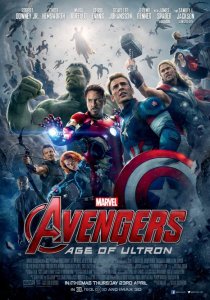
 Marvel has been branding their Cinematic Universe in such a way that each subsequent film teases the next, and all seem to be building to something. “Avengers: Age of Ultron” should be that moment, but it doesn’t feel like the culmination of all that’s come before. Worse, it doesn’t even feel like an “Avengers” movie.
With 2011’s “The Avengers”, director Joss Whedon did successfully juggle the many characters who showed up in Marvel’s “Phase One”, and he seemed to wink at the camera while doing so, allowing these big personalities to clash and poke fun in a way that returned the color, fun and originality to what had become an increasingly dense, plot driven series.
“Age of Ultron” doesn’t allow its characters to grapple with a major story as a team. It’s a super mess full of forced backstories and plot threads to past and future movies. Black Widow and Bruce Banner are given an unlikely and unexpected tortured romance while trying to battle their demons. Iron Man hints at fracturing from the team as he will in “Captain America: Civil War”, but feels half-baked and underdeveloped here. Thor disappears from the team to fulfill a nonsensical side plot in a Nordic cave. Hawkeye suddenly has family melodrama on a reclusive farm that slows the film to a halt. And new additions are given neither the screen time nor the emotional heft to truly make an impact.
If Marvel isn’t building to this and still hasn’t arrived at their best, what are we waiting for?
In the film’s opening shot, Whedon weaves through the forest of a fictional Russian-esque country as the Avengers stage an attack on a compound. It’s an unbroken take (achieved through digital trickery) that unnaturally circles the area in an effort to showcase each hero one by one as they deal with some baddies, all before catching them all lunging forward at once in a poster-ready screen grab. It’s emblematic of how “Age of Ultron” both looks and feels, in which Whedon is really just showing off. Some of these elaborate, but not stylish shots only remind how much is going on.
Like the camera, the plot also fails to stay fixated in one place. Upon reaching the compound, they retrieve Loki’s scepter. Tony Stark (Robert Downey Jr.) and Bruce Banner (Mark Ruffalo) plan to research it in an attempt to create a brilliant form of artificial intelligence that can provide peace on Earth somehow. They inadvertently succeed but manage to create Ultron (voiced by James Spader), a highly intelligent program that in no time flat deduces that the only way to achieve peace is to eliminate The Avengers and evolve mankind through extinction.
Ultron brings to the film possibly Marvel’s first actual theme and message, and he proves to be arguably the best super villain Marvel has dreamed up. He repeatedly sings “I’ve Got No Strings” from “Pinocchio” to show he’s not one of Iron Man’s puppets, and his principled ideas about the evolution of intelligent life resound with the weight of countless sci-fi films before it. “Age of Ultron’s” ideas about AI and the folly of man may not be profound, but delivered with Spader’s quick, dry, ironic tone, it’s convincing.
But as for making a convincing narrative and objective for Ultron, Whedon is far less successful. As a villain, Ultron is convenient. He exists in the Internet! He’s unstoppable, and always one step ahead. So when his plan is revealed to make a tangible version of himself, it seems like a step in the wrong evolutionary direction. But even that plan fizzles out to make way for yet another new character, and the resulting final battle is The Avengers taking on thousands of disposable metal baddies. The action sequences feel like a rehash of not just the chaotic spectacle at the end of “The Avengers”, but of “Iron Man 3” for how many Stark-powered enemies they’re forced to bring down.
Whedon has more luck with a battle between Iron Man and a hypnotized Hulk in a crowded city. It isolates the action on two figures and smashes things up real good. Yet it too blends in with the chaos at the Russian compound, then in the African warehouse, then in the Russian city. Marvel seems unable to stage a compelling set piece that doesn’t involve a million moving parts in a busy area.
These scenes are so unmemorable because they lack suspense. They’re hugely bloodless and without any of the dark edges of Christopher Nolan’s or Zack Snyder’s superhero attempts. Marvel also doesn’t see the need to make us care for these characters again, as they’ve already done so in previous films. But it’s easy to forget what makes Tony Stark heroic and likeable in the first place, not least of which because he’s been separated from the brilliant, charming chemistry he has with Pepper Potts (the movie makes a quick, cheap concession to explain why Gwyneth Paltrow and Natalie Portman are missing).
When the action does settle down, Whedon brings his trademark smarm to the party, particularly in a scene where all the Avengers try to lift Thor’s (Chris Hemsworth) hammer and find themselves unworthy. These characters have shades and nuance, but under Whedon’s dialogue they all seem like the same cocky adventurers with a quick act of wordplay here and a too-clever high-brow pop culture reference the next.
But Whedon has interesting things to work with, and you wish Marvel would withhold flashbacks of Black Widow’s (Scarlett Johansson) assassin up-bringing for her own movie and condense the two hour, 20 minute run time of this one. Johansson is arguably the standout of this franchise, and her interactions with Ruffalo are the closest Marvel has gotten to making Hulk’s werewolf curse understandable and believable.
“Age of Ultron” isn’t a movie though; it’s seven movies, and none of them stick. Marvel has to quit making teases for their next Big Thing and make that movie today.
2 ½ stars

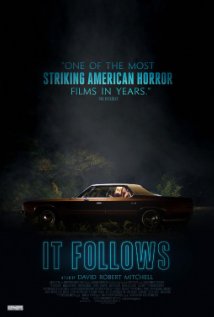 Sex has long gone hand in hand with horror films. The promiscuous girl among a handful of teens in a cabin in the woods is always the first to go, and the virgin always lives to tell her tale. As that cliché grows more prevalent, more and more horror films have attempted to subvert it.
 Though most fictional movies are not trying to be documentaries, there’s a desire we crave for authenticity in characters, storytelling and habits. To make a truly “authentic” movie about a woman suffering from a disease or disability might not be much of a movie at all. People grow old and sick, and those affected try to adapt and move on.
 There’s a moment in “Out of the Furnace” when a backwoods, villainous hick named Harlan DeGroat has a deer skinned to its bones hanging from the ceiling. The imagery calls to mind something absolutely raw, as though this bleak look at Americana symbolized all that’s emotional and open about the people who live this way. But Director Scott Cooper’s prized trophy doesn’t have that much meat on its bones to begin with. “Out of the Furnace” feels frustratingly unspecific, empty and generic, no matter how gritty the characters are.
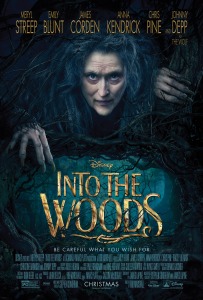 Do we really need another movie or show that reimagines old fairy tales? How many different ways can we tell the story of Cinderella? Stephen Sondheim’s musical “Into the Woods” first premiered in 1987, but since then the spirit of taking beloved childhood properties and twisting their meanings to play up the dark imagery and fables at their core has exploded into pop culture. It hardly seems new to suggest that the Little Red Riding Hood story has gross undertones of, perhaps, pedophilia or otherwise. Ooh, how sinister.
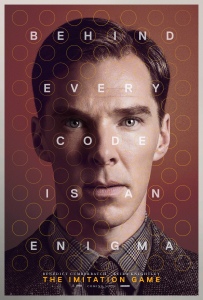 No one goes into making a movie trying to make an “Oscar movie”, which with eight nominations and Best Picture frontrunner status, “The Imitation Game” has easily been for some time. But a director will go into a film trying to convey a person’s importance. Those fawning biopic qualities of genius in Morten Tyldum’s film overshadow the crafty genre picture of numbers and intellect waiting to be decoded.
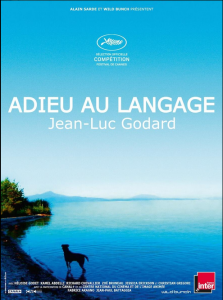 Jean-Luc Godard has been innovating and testing the limits of cinema for over 50 years. This is the man who effectively invented the jump cut decades ahead of its time. His vision and his legacy are unspeakable. With his latest film “Goodbye to Language 3-D” he has found himself ahead of history yet again and this time possibly on the wrong side of it.
 Though Michael Apted’s series of “Up” documentaries typically get pegged as pinnacle achievements in documentary film, they’re actually landmarks of television. This was reality TV before the genre was a thing, and for possibly the only time in the genre’s history, the subjects were somewhat reluctant and unwilling participants.
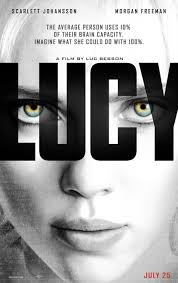 Luc Besson’s “Lucy” is a mad genius mash-up of “The Tree of Life”, “The Matrix” and “2001: A Space Odyssey”. Its script, concept and sheer disdain for rules or accurate science make it laugh out loud ridiculous, but in doing so it becomes purely inventive and cinematic. “Lucy” is about no limits via the power of your mind, and this film seems to have none. It’s a wacky blast of an action/sci-fi that in just 90 minutes simply doesn’t stop.