Magic Mike XXL

Channing Tatum is a true star in the sexy, super fun, bro-fest that is “Magic Mike XXL”.

MagicMikeXXLPosterThe first “Magic Mike” was a surprise not just because it was the start of the McConaissance and because it took a chiseled action hero with a square chin and turned him into a bona fide sex icon. The whole look and feel of Steven Soderbergh’s 2012 film made it feel more art house than sexploitation.

“Magic Mike” was Soderbergh tinkering with genre yet again. In “Haywire” he had people who could really fight, so he made them fight and shot them in a way that didn’t hide it. In Channing Tatum, he had a guy who could really strip, and he definitely didn’t hide anything. The film was an experiment. But it was a modestly budgeted experiment that made $176 million.

Despite “Magic Mike’s” massive success, that film school explanation wasn’t quite good enough for a lot of women who really just wanted to watch a bunch of dancing naked dudes.

Rest assured, “Magic Mike XXL” has a lot more of that.

Soderbergh has passed on directing duties to Gregory Jacobs, but stayed on as cinematographer (with the pseudonym Peter Andrews) to give “Magic Mike XXL” that same art house look of classic mid-range shots, clever mood lighting and sharp, alluring coloring. But it’s such a refreshing and scandalous blockbuster because it has turned the story of identity and a seedy stripping community into a bro-tastic road trip movie and movie musical. Ladies will like it just fine, but “Magic Mike XXL” is also wonderful counter programming to the bros who sat through the hateful, thick-headed misogyny of the recent “Entourage” movie.

That’s because the bros of “Magic Mike XXL” don’t strip just so they can bang chicks; they want to make these girls smile. The film does just that when Mike encourages his cohort “Big Dick Richie” (Joe Manganiello) to go into a gas station convenience store and get the attention of a sad looking employee. “That girl looks like she’s never smiled in her life,” he says, but she will if the right tune comes on and if he puts his heart into his moves.

“Magic Mike XXL”’s plot concerns the Miami boys’ “one last ride” (maybe this is good counter programming for “Furious 7” as well) to a stripper convention in Myrtle Beach, but the film is actually an assortment of creative set pieces and isolated vignettes. They stop at a burlesque home where Mike’s former boss Rome (Jada Pinkett Smith filling in nicely for Matthew McConaughey in the emcee spot) manages black male dancers for an almost entirely black female clientele. But in addition to a dance or a sexy song (from an excellent Donald Glover/Childish Gambino) they get some guys who will listen and for a moment make them feel loved. When they crash a party of the moms of some of their younger girlfriends, they get close to women who haven’t been touched or appreciated for their beauty in years. And when the boys party on the beach, they reveal all of their ambitions and dirty pleasures, whether it’s for making smoothies or watching Oprah.

These moments arguably have more sexual tension and chemistry than anything on stage. It makes for a wonderfully feminist movie that doesn’t detract from the bro love fest. And no one would expect a movie about strippers to be this perceptive.

And yet Magic Mike himself is the reason you’re really “coming”. Channing Tatum is such a star. David Ehlrich wrote in Rolling Stone that Tatum is “this generation’s Gene Kelly, and ‘Magic Mike XXL’ is his ‘Singin’ in the Rain”. In what might be one of the best scenes of the year, Mike is building furniture in his woodshed, and when Ginuwine’s “Pony” comes on, Tatum literally starts making sparks. He moves so easily, and with so much more than just sex appeal. He makes love to his workbench, and from that early moment you know it’s on. He also keeps up with one of the best hip hop dancers in the world in “So You Think You Can Dance’s” Twitch, who choreographed everything and appears in the film’s supersized final dance number along with Tatum.

But Tatum is such a perfect Magic Mike not for his looks alone but for his goofy charms and immensely positive attitude. He loves his bros so hard, and rather than put downs and snarky one-liners he’s a goof who dishes motivational idioms to his buds and chats up the joys of eating Oreos to his girls. “Someone stole your smile,” he says to romantic interest Zoe (Amber Heard), “and you need it back.” SWOON.

The first “Magic Mike” was simply not a blockbuster, and it almost doesn’t make sense to compare the two films. “Magic Mike XXL” is on its own level, and even more so than blockbusters like “Avengers: Age of Ultron” or “Furious 7”, it deserves its XXL suffix. Because when you combine the dancing, the charm, the guys, and the style, “Magic Mike XXL” has one massive package.

3 ½ stars
Jurassic World

Colin Trevorrow’s update on Steven Spielberg’s classic “Jurassic Park” lacks the ideas and intelligence that made the original a hit.

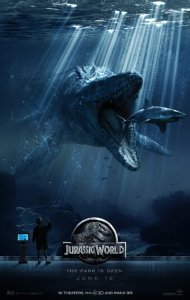
JurassicWorldPoster“Jurassic World” grossed over $200 million domestically in its opening weekend, making it one of the highest opening weekends at the box office of all time. It further was one of the all time fastest to surpass $1 billion in the world, and has already earned over $500 million domestically in just three weekends. It would seem Americans don’t echo the sentiment heard early in “Jurassic World” regarding the poor performance of their theme park: “No one is impressed by a dinosaur anymore.”
And yet the film has found fierce criticism from those quick to label it misogynist or even racist, and sharp defenders quick to shut down anyone that could be too PC or too high and mighty of a critic. Matt Singer wrote a piece entitled “Stop Telling Me to Turn My Brain Off During Movies“, a plea for people to have higher expectations of their blockbusters than absolute zero. Like any major, unexpected hit, “Jurassic World” is the subject of a lot of talk.

The critics are right: “Jurassic World” is loud, cliche, badly written, and dumb, dumb, dumb. But it’s also fun, exciting, campy, cheesy, scary, and at times awesome. These are all things blockbusters have been, will be and arguably should be. But Steven Spielberg’s original “Jurassic Park” and Michael Crichton’s novel on which it is based were always stories of ideas. They were full of dreams and ambitions for science, but also fearful of technology, the power of man to wield it and the greater power of nature to put man’s hubris and greed in check. Spielberg managed to put all that into a movie with friggin’ dinosaurs spitting poisonous acid at Newman, raptors opening doors with their talons and a T-Rex eating a man cowered over a toilet.

What makes “Jurassic World” so frustrating and lazy because of all its flaws and in spite of its strengths is that it’s not trying to be anything more than a blockbuster. Colin Trevorrow’s movie isn’t a film of ideas but a copy of a great one and a genetically modified mish-mash of dozens of others. It’s a blockbuster by committee, complete with Hollywood’s biggest rising star, their finest display of special effects, a whole lot of nostalgia baiting, and a healthy dose of product placement for good measure. If it could’ve been all this and been a smart spectacle, then we would’ve really had something.

Set years after the events of the original “Jurassic Park,” Isla Nublar has not only somehow been salvaged from the destruction and chaos brought by the dinosaurs, but it has now been transformed into a thriving theme park far beyond the original vision. Leading the park is Claire (Bryce Dallas Howard), a by-the-numbers, overly driven business woman with no time for anything but her work, least of all her two nephews coming to visit, the young Gray (Ty Simpkins) and the teenage Zach (Nick Robinson). Claire says that over time people and kids have grown bored of even seeing dinosaurs, and clearly she has as well, because she never sees these amazing creatures as anything more than assets. Her new plan to spike attendance is to create a new dinosaur, the Indominous Rex, a genetic hybrid designed to be bigger, faster, scarier (and presumably cost-effective as well?) and everything the park needs.

Chris Pratt Jurassic World

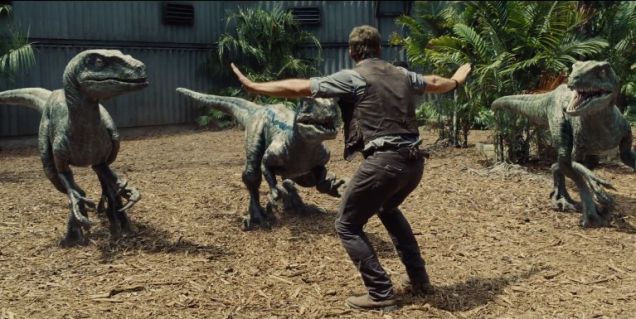
Owen (Chris Pratt) is the park’s raptor trainer brought in to survey the development of the new dinosaur, and having developed a rapport with his four raptors, he immediately understands how terrible an idea it is to create an unstoppable super dinosaur with no natural instincts to prevent it from murdering and eating everything that moves. The dinosaur is smart enough to trick the park owners into helping him escape, and still Claire refers to it as “just an animal”. These people are dumb enough that a chimp could fool them, let alone a genetically modified super reptile.

Claire is the worst kind of character type: the workaholic woman who projects confidence but is eventually humiliated by her lack of real-world skills and how she runs around in heels the entire film. It’s silly to throw around any “isms” and to assume ill will toward women by the filmmakers, but her character is beyond old fashioned. Howard plays her in the middle portion of the film as an Old Hollywood screwball type, but later turns into the action star luring T-Rexs with flares.

“Jurassic World” wastes far too much time with science and stockholders worrying about the park’s future in a way that was never filler in “Jurassic Park”. And there’s an absurd sub-plot regarding Vincent D’Onofrio’s plan to weaponize the raptors, with the pipe dream of teaching them to hunt and kill terrorists in the Middle East based on Owen’s command (call it “Zero Dark Raptor”).

A more experienced director than Trevorrow, with just the indie comedy “Safety Not Guaranteed” to his name, would’ve realized that we’ve come for the dinosaurs, or at the very least the suspense and build-up required to make CGI dinosaurs interesting. Spielberg managed to withhold the T-Rex and more of the awe-inspiring dinosaurs just as he did with “Jaws”. Trevorrow dilly dallies with exposition and clueless kids venturing where they don’t belong. It can be something of a mess, and the truly great moments, including a pterodactyl attack reminiscent of “The Birds,” a dinosaur scuff-up worthy of Japanese kaiju, and a giant aquatic dinosaur leaping out of the water like Shamu, can feel off in terms of pacing and anticipation.

“Jurassic World” is the perfect hybrid blockbuster worthy of one of the highest grossing movies of all time. But like the Indominus Rex, it’s an unholy mix of elements and bad traits that just makes you wish for something more natural.

2 stars

John Wick

Keanu Reeves is back in action movie form with Chad Stahelski’s and David Leitch’s debut film.

john_wick_xlgMost action movies are about putting the myth into the man, crafting a story and an iconic hero from action set pieces that in recent years has only come up with a short list of truly great action heroes. The best action stars are the ones that we can believe could dismantle just about anyone if given the opportunity. James Bond, Jason Bourne, and perhaps most recently Liam Neeson as whomever he plays, all come to mind.

“John Wick” puts the man into the myth, casting Keanu Reeves as a brilliantly blank slate completely convincing as a man capable of all the fear and badassedry we’ve come to expect of our cold-blooded killers. Chad Stahelski and David Leitch’s film starts by building up John Wick as that man capable of doing anything, of mowing down anyone who gets into his way, and then they deliver with a no frills, no nonsense action movie. It’s pure iconography and myth making to go along with the action. It’s a film that risks being all buildup and no payoff were it not for the elegant, minimalist style Stahelski and Leitch bring to every moment, but because they’ve done away with the more frivolous elements of standard action fare, it feels closer to all payoff.

When we meet John Wick, a man who almost always must be referred to by both syllables of his full name, he’s just lost his wife to an illness. Now he lives in an opulent, empty, sleek and modern house all alone until his wife leaves him a small puppy as a parting gift to keep him company after her death. He seems to have no job and no hobbies but can be seen performing insane donuts and burnouts with his vintage, pristine, 1969 Mustang. At a gas station, some Russian toughs ask him how much he wants to sell it for, and Wick, in Russian, lets them know it’s not for sale.

Later the Russians break into his house, steal his car and kill his new puppy, but leave him alive. Not a good idea. Until this point we don’t even know John’s full name, but his thieves soon do. A Russian mob king pin named Viggo Tarasov (Michael Nyqvist) learns his son Iosef (Alfie Allen) was behind the attack when an associate informs him bluntly, “He stole John Wick’s car and killed his dog.”

“Oh.”

Viggo tells Iosef of the old Russian fairy tale made to scare children, The Boogeyman. He even has a quiet little nursery rhyme. “He’s the one we sent to kill the fucking Boogeyman”. As a fearsome assassin, Wick earned his freedom by completing one of Viggo’s impossible tasks and subsequently building their empire. Iosef’s actions violated their deal, and now John Wick won’t stop until everyone is dead.

As Viggo strikes fear into his clueless son’s head, we see Wick pounding away at his garage floor with a sledgehammer, literally digging up his past. Reeves’s work, complete with so much darkly, unbridled rage in this moment, has in just a few minutes earned this vaulted presence before even shooting a bullet. This is his best role since “The Matrix”. He’s found his voice by minimizing it as an actor, allowing his actions to do the talking.

Wick as a character follows suit. He never kills with style, just simplicity and efficiency. When he catches a pleading victim spitting hate and four-letter words as he’s about to die, Wick doesn’t even stop for words before putting a bullet between his eyes. He finishes the job. This allows him to be brutal, but also stealthy, and Stahelski and Leitch echo this in an early raid on Wick’s house and Wick’s assault on a mob hotel and nightclub. This is hardly a calm action movie, but we’re never treated to a barrage of bullets, noise and testosterone either. Arguably Wick’s coolest kill comes when he punches a guy, reloads his gun and fires all before the guy can even catch his breath. Stahelsky and Leitch are directors who know how to make a long take count, and they earn Wick’s reputation as a result.

And yet for a bare bones plot, “John Wick” has a whole array of layered rules and principles to go along with its mob world mentality. Fellow killers all know Wick’s past, and they trade gold bullions for exclusive entry into select hideouts, each with its own set of rules and codes to live by.

There’s some serious world building at play here, and John Wick is fortunately a strong enough character that we dearly need a sequel.

3 1/2 stars

Inside Out

Pete Docter’s creative Pixar classic helps explain the complex workings of our mind to kids and adults alike.

inside-out-posterAs adults, we use stories to explain to our kids how the world works. We have fables that teach kids etiquette, or why the planets revolve around the sun, or why we celebrate holidays. Pixar has managed an incredible feat (and it’s hardly the first time) by creating an entire ecosystem of ideas, mechanics and colors to help explain the most complicated aspects of our minds.

“Inside Out” is a movie about emotions and filled with them, but it’s really a portrait for who we are and how we function. Across their 15 films, Pixar has made a good handful of sheer classics, and “Inside Out” is among them. But Pete Docter’s film is groundbreaking because it may be the first to reach us on such an intimate, fundamental level.

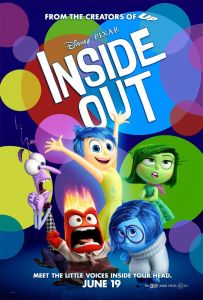
What goes on inside your head? That’s the first question “Inside Out” asks and it’s a question that starts at birth. Riley (Kaitlyn Dias) is born, and with her first waking thought is Joy (Amy Poehler). Joy is a bright yellow sprite with short blue hair and eyes as big as her heart. She presses a button inside baby Riley’s mind and makes her smile. As Riley grows, more emotions emerge to work together and compete for control of Riley’s central control panel. First is Sadness (Phyllis Smith), a round blue ball of depression who literally brings down anything she touches. Fear (Bill Hader) is a skinny purple bug dressed in plaid helping Riley avoid tripping on cables or getting into trouble. Disgust (Mindy Kaling) is a stylish green drama queen averse to broccoli. And last is Anger (Lewis Black, naturally), a short red hot head in business casual attire who loves traffic, talking back to dad and complaining about San Francisco pizza.

For each memory and moment in Riley’s life, a colored ball coded to each emotion is created with a brief video clip memory, stored in “headquarters” during the day and then shuttled off to a massive array of shelves signifying long term memory. There, little sanitation workers dispose of phone numbers, U.S. presidents and more to make way for newer memories. Meanwhile, a small collection of “core memories” defines the islands of personality that make up Riley (if psychologists have said that our traits are in some way “connected”, Pixar has animated that idea literally). When Sadness accidentally turns one of Joy’s core memories blue, the two scramble to fix it and end up separated from headquarters and the ability to make Riley happy or sad. It all coincides with Riley’s disappointing move away from Minnesota to California and gradually leaves her interests, personalities and feelings crumbling away.

The factory-like mechanics of “Inside Out” are not unlike the Scream factory Docter envisioned in “Monster’s Inc.”, in which our emotions and how we process them keep the world moving. But Docter and co-director Ronaldo del Carmen have fun with every interaction and every moment of a human’s life. Not one line or image passes in front of Riley’s eyes that does not dictate a quick-witted reaction from one of our five little balls of emotions. It’s a movie that literally makes good on the expression that someone’s emotions have taken over. In a dinner table conversation between Riley and her parents, her father’s own team of workers launch into a war room, and putting his foot down has all the gravity of turning two keys to launch a nuclear sub.

InsideOutAnger

And yet thematically, “Inside Out” feels closest to “Toy Story”. The anthropomorphic emotions have given their lives to making Riley happy and creating memories that shape who she is, and as she grows into becoming a teenager, her moods and her need for memories that made her a joyful kid are no longer needed. Joy and Sadness come across Bing Bong (Richard Kind), Riley’s discarded imaginary friend now wandering the far reaches of her mind hoping to one day be remembered.

Often without much exposition, Docter helps convey through colors and cleverly constructed puns (the arrival of a “train of thought”) and analogies the inner workings of the mind from dreams, the subconscious and abstract thought. There’s an incredible sequence that plays with the film’s animation worthy of one of Pixar’s daring animated shorts, in which abstract ideas transform Joy and Sadness into surreal, cubist shapes and eventually two-dimensional drawings. The sequence works as a goofy action set piece, but kids and adults alike can understand the external real world implications these actions have on Riley’s mind.

Some of Docter’s most poignant ideas are perhaps a bit more common than the film’s ingenuity and perceived originality give it credit for: sadness as much as happiness shape who we are and what we remember, and as we grow, even our emotions grow more complex. But it’s not the surface level emotions and ideas that make “Inside Out” such an incredible tearjerker. It’s the complete package of vivacious animation, exuberant humor and sheer imagination that help us better understand these feelings and make this film so human both inside and out.

4 stars

Spy

Melissa McCarthy reteams with her Bridesmaids director Paul Feig for their latest spy spoof.

SPY_1SHEETPaul Feig’s “Spy” bills itself as a spy movie parody right in its title, but it veers closer to a traditional action-comedy vehicle for Melissa McCarthy than an out-and-out spoof. The elements are all there for a classic, but it lacks the tongue-in-cheek homages to cinema and zaniness of the OSS:117 movies or the sheer stupidity of even the Austin Powers movies. That said, Melissa McCarthy might be a shoo-in for the next James Bond once Daniel Craig steps aside.

Feig starts to reinvent the spy genre by imagining the other side of James Bond’s innate talents. Bradley Fine (Jude Law, donning a convincing American accent against expectations) is the suave CIA operative leading a sting on a Russian terrorist wielding a nuke. But he only manages to get so far because of who is speaking in his ear, Susan Cooper (McCarthy). Susan is Chloe O’Brien if she was stuck in Michael Scott’s office, where even at the CIA there are rats pooping through the ceiling and co-workers having loud birthday parties in the break room while Fine faces life and death stakes.

The Russian agent’s daughter Rayna (Rose Byrne) takes possession of the nuke, murders Fine and reveals she knows the identity of every other in-the-field CIA agent. Feeling responsible for his death, Cooper volunteers herself to track Rayna and intercept the nuke in her possession, with the hope she can remain anonymous.

It’s maybe more plot exposition than a spoof like this actually needs, but Feig quickly gets to the juicy spectacle of seeing McCarthy act. Some of her roles, even her breakout role in Feig’s “Bridesmaids”, have seen her go broad, vulgar and aggressive to a fault. But in “Spy” she plays the chipper and naïve Midwesterner that gives McCarthy her star power off screen. It’s that much more of a shock when she flips a switch and effortlessly hurls insults about people looking like a bag of dicks or dead hookers.

As Genevieve Koski put in her Dissolve review, it’s more than “fat lady go boom” jokes as the trailers have made it out to be. But Feig still offers up a bad mix of lazy stereotypes of slimy, Italian misogynists as well as gags simply at the expense of McCarthy’s ludicrous disguises.

As with many of these films, it’s the supporting cast that does all the heavy lifting. Rose Byrne continues to be a standout, earning the line of the movie when she flatly declares at one of Susan’s worse puns, “What a stupid fucking retarded toast.” Jason Statham as a rival agent arguably gives his most intense performance to date, endlessly one-upping himself with increasingly ridiculous secret agent feats he can’t seem to actually perform. And British comic Miranda Hart is poised as the breakout, a goofy looking best-friend type with about a foot on Rebel Wilson but all of her awkward charm.

“Bridesmaids” opened doors for actresses like McCarthy and Byrne to do just about anything, including make a goofy spy movie previously reserved for men. But then “Spy” isn’t exactly “Bridesmaids”, and Feig might’ve just gotten more mileage out of “Bridesmaids 2”.

3 stars

Tomorrowland

Brad Bird’s clever sci-fi is a refreshingly optimistic and fun adventure movie with a great George Clooney performance.

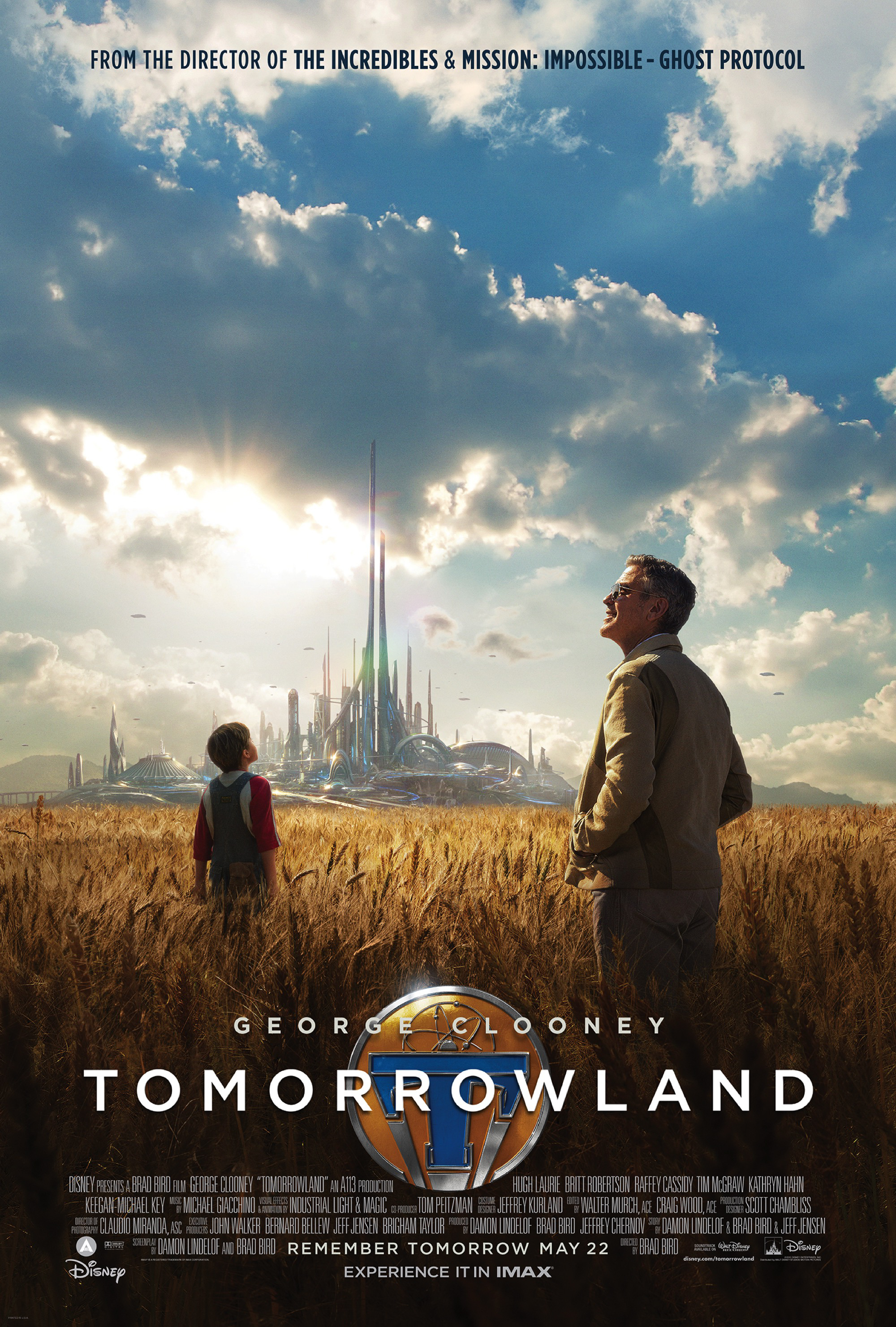
Tomorrowland_Second_Poster“Tomorrowland” is the first movie of the summer, and perhaps many summers, that doesn’t involve a sentient robot plotting to exterminate the Earth with a giant asteroid, or a massive Earthquake ravaging the San Andreas fault line, or the apocalypse transforming the world into a desert wasteland. Director Brad Bird has a squeaky clean vision of the future but also a sense of excitement earned from modest thrills of both the sci-fi and the lo-fi variety.

Seeing a family-friendly adventure film with a strong sense of humor and healthy head of ideas is certainly a refreshing, positive change of pace from the doom and gloom. Yet “Tomorrowland” would play almost perfectly if it didn’t also try to make the idea of a squeaky clean future over a bleak one its very thesis.

“Tomorrowland” is named for the futuristic area in Disney World and Disneyland, but Bird’s film is as much about an amusement park as “Pirates of the Caribbean” is about the animatronic pirate ride also housed in Orlando and Anaheim. And while it doesn’t serve as a blatant ad for Disney the way many of their most recent properties have, Bird trots out the names of Edison, Tesla, Einstein and Jules Verne, along with a healthy dose of inspirational idioms designed to lead the innovation of Disney’s next wave of “Imagineers”.

One of those quotable motivation phrases comes when two parents ask their toddler daughter why she wants to go to space, warning her, “What if nothing’s there?” “What if everything is there?” That little girl grows up to be Casey Newton (Britt Robertson), and yes, her name is Newton. She’s a whip-smart techie and hacker who tries to prevent NASA from tearing down a launch pad and consequently put her dad (Tim McGraw). When she gets caught, she’s arrested and finds a pin with a blue and orange “T” along with her belongings. When she touches it, she’s transported to a shimmering civilization complete with jetpacks, rockets, hovering trains and more. But before she can board a rocket to the stars she’s plunged back into the real world.

Casey will spend much of “Tomorrowland” actually trying to reach the place, and Bird and screenwriter Damon Lindeloff make an interesting choice in withholding our arrival there for so long. It’s a future that seems out of reach and is notably less glamorous when we finally arrive, but all along the way Casey encounters incredible science fiction set pieces, from robots to time freeze rays to a sickly matter transporter that suggest the genius and innovation that can be found here at home.

To get to Tomorrowland, Casey enlists the help of Frank Walker (George Clooney), a former resident who we first meet as a little boy. He submits his jetpack invention to a contest at the 1964 New York World Fair, and is recruited to be a Tomorrowland citizen by a young girl named Athena (Raffey Cassidy). Now Clooney plays the sourpuss to the two wide-eyed, freckly young women in his company, hilariously cynical at the idea of Tomorrowland and awaiting the arrival of the end of the world, which he believes will occur in less than 60 days. Only with Casey’s arrival does he get a glimmer of hope that the fate of the future and planet can be spared.

Bird gets a lot of mileage out of this premise, and he has fun with expectations as well. For as much fun as it is to see Clooney zap robots with makeshift laser booby traps, it’s just as refreshing to see Bird stop the sci-fi and watch Casey beat a robot to death with a baseball bat.

But Clooney says something that reflects “Tomorrowland”’s blind desire for positivity without much room for cynically challenging the idea of utopia: “Can’t you just be amazed and move on?” Tomorrowland as an actual, functioning place is never as fully developed as it would seem. Eventually it becomes clear that it’s a haven for geniuses in an alternate dimension where they can explore their ideas free of politics and intervention. Hugh Laurie, playing Tomorrowland’s head-honcho Nix, even stops the movie near its climax to deliver a monologue about humanity’s sloth and negativity, one that will bring about the end of the world.

It isn’t surprising that a Disney movie might choose to avoid some of the ramifications of a world for privileged geniuses in paradise, or that there was ever a person named Ayn Rand. Yet “Tomorrowland” doesn’t deserve that sort of hyper-analysis. It’s too much fun, and already it’s being written off as a stodgy example of Disney embedding branding into their films, despite being a massive financial failure for the Mouse House already. If Bird’s film teaches us anything, it’s that there’s hope for Hollywood blockbusters as much as there is for the human race.

3 stars

Me and Earl and the Dying Girl

Alfonso Gomez-Rejon’s breakout film swept this year’s Sundance, but is more than a ‘Sundance Movie’.

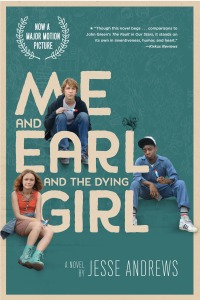
MeAndEarlPosterWhile independent cinema is traditionally any movie that’s independently financed, many newer film goers are first introduced to indies by what more experienced cinephiles have pejoratively labeled “The Sundance Movie”. They’re films like “Little Miss Sunshine”, “Juno”, “(500) Days of Summer”, “The Way Way Back”, and many more of varying quality. They’re not just movies that have premiered at Sundance; they’re quirky, irreverent, hipster, crowd-pleasing, charming, and to some degree, that horrible word best suited for Zooey Deschanel and Belle and Sebastian songs, “twee”.
“Me and Earl and the Dying Girl” swept this year’s Sundance with not just the Grand Jury Prize but also the audience award. I expect it to be a massive mainstream hit. It would be so easy to lob one of those adjectives onto it and write it off as something less than a masterpiece because it falls into The Sundance Movie category.

And Alfonso Gomez-Rejon’s film all but announces that it will be that sort of movie in its opening moments: voice-over narration from a cynical teenager making wry observations and quoting pop culture, all based on a bestselling YA novel. But in just as quickly, Rejon makes waves with those expectations. “Me and Earl and the Dying Girl” is dark, cringe-worthy, weird and best of all, cinematic. In its use of both film references and active cinematography, Rejon’s film is as much about cinema as it is adolescence. He’s playing with genres and expectations in a way that is so hilarious, heartwarming and utterly gratifying.

“Me and Earl and the Dying Girl” is one of those movies, but it is also un-ironically the best movie of the year.

The Me of “Me and Earl and the Dying Girl” is Greg (Thomas Mann), a smart high school senior not lonely and misanthropic, and not trying to avoid human contact, but trying to avoid any serious connections. He latches onto individual cliques for just long enough to be acknowledged but not long enough to be labeled. He’s got it down to a science. While the narration is a common tool in this sort of indie, it’s the camera that really gets inside Greg’s mind. There’s a running gag involving stop-motion animation about how hot girls are like a moose stepping on a helpless squirrel, a gag that kills every time it abruptly makes an appearance. There’s even a hilarious shot in which Greg’s mom (Connie Britton) walks in on him as he’s looking at porn, and his frantic attempt to switch tabs only reveals more nudity.

His parents inform him that one of the girls in his class, Rachel (Olivia Cooke), is suffering from leukemia. Greg doesn’t really know her, and she insists she doesn’t need new friends or pity from someone being forced by their mom to come over, but then of course he was forced by his mom to spend time with her in the first place. “Eight years of carefully cultivated invisibility, gone,” he says.

Greg reveals to Rachel his affinity for making movies with his “coworker” Earl (RJ Clyer), a tough nosed kid from the other side of town. Their films are all horribly bad remakes, replacing one letter or word of a classic title to make it a potty-mouthed, so-dumb-it’s-awesome pun, and the results are a thing of beauty. Everything from “Apocalypse Now” to “Burden of Dreams” is skewered. It’s a film that goes deeper into cinephilia than most movies that claim to do the same. Soon the two find themselves making a film for Rachel, but Greg subconsciously feels doing so would allow him to get too close to someone so sick.

The story has the arc of something like last year’s “The Fault in Our Stars,” but the plot itself doesn’t even emerge until midway into the film. Rejon and Jesse Andrews’s screenplay, working from his own novel, find depth in their characters and allow them to emerge through conversation rather than situation comedy. It gets laughs because it isn’t afraid for Greg to put his foot in his mouth with an idiotic joke telling Rachel to play dead. It isn’t too cute to have Earl blurt out in his baritone voice “Titties” as soon as the thought crosses your mind. And it isn’t averse to having Nick Offerman shove a cat in the camera’s face.

There’s a healthy cynicism to everything here, and the movie literally turns on its head in a few moments to create an awareness of the camera and the cinematic devices at play. Like a Wes Anderson film, it’s extremely attentive to detail but without the artificiality that a handful find frustrating about Anderson’s style. Rejon finds beauty in static long takes, quick movement and even quicker editing, and time and again Greg steps out of his character’s shoes to explain to the audience things are not going to happen with the same melodrama or emotional catharsis you’d expect.

As a result, “Me and Earl and the Dying Girl” goes from a fairly outrageous and unexpected comedy to getting very real, real fast. Rejon grapples with spiritual sensations of love and life after death, and he doesn’t forget that these adult themes are still filtered through the minds of teenagers. The film’s climax and ending scene in particular capture the same screwball charm but are moments of sensational beauty.

“Me and Earl and the Dying Girl” is a lot like its protagonist and his desire to stay on an island unto himself. It’s a comedy and a tearjerker, and it’s smart and cute and quirky, but it just touches on those qualities without ever belonging to a single group.

4 stars

Love & Mercy

John Cusack and Paul Dano both play Brian Wilson in this biopic on the life of the Beach Boys singer.

LoveandMercyPosterAs a biopic, “Love & Mercy,” the story on the life of Beach Boys singer Brian Wilson, is a bit unusual. It passes over their surf pop rise to stardom in the early ‘60s in just the credits sequence. It jumps forward and backward in time to when Brian was both a young and middle-aged man on a whim. At times Bill Pohlad’s film is as deeply spiritual and scatterbrained as its subject.
But upon recording “Pet Sounds,” Brian Wilson’s unusual, yet signature, masterpiece album with The Beach Boys, he explained to one of the musicians who thought the music didn’t work, “It works in my head.”

“Love & Mercy” follows Brian as a young man played by Paul Dano during the sessions for “Pet Sounds” and the unreleased “Smile” in 1966, then again in the ‘80s, now played by John Cusack. As an older man, Wilson met Melinda Ledbetter (Elizabeth Banks) while under the supervision of Dr. Eugene Landy (Paul Giamatti). Awkward, soft-spoken and timid, Cusack walks a fine line between making Wilson creepy, damaged, flat out weird or all three. Regardless, he asks Melinda out on a date after revealing his identity and in a scary scene at a barbecue makes clear to her just how terrified he is of his caretaker.

Dr. Landy explains to Melinda that Brian is a paranoid schizophrenic, and asks that if they are to become romantically involved they need to establish ground rules such that he can retain control over how Brian is cared for and behaves. What’s daring for a biopic, but not uncommon, is that in these moments we see everything from Melinda’s perspective. Her detached position challenges our notion that Brian is really the genius we know him to be, separating us from the musical history and conflict portrayed in the earlier point in his life.

And yet Dano perhaps shines the most, performing incredibly lifelike recreations of Brian’s meticulous creative process. The faded, docu-realistic camera work inside the studio shows us the gradual methodology of his genius at work. They’re fun, lighthearted scenes as dogs bark on the sound stage and Brian picks at the inside of a piano with bobby pins, but we never get the full picture or adoration for Brian’s music. Pohlad always calls attention to the failures and the mental turmoil that masked just how significant his work was. Pohlad gets a big gasp out of news that Brian’s father sold the band’s song rights for profit, or when Brian loses his mind to the noise of silverware clinking on plates. Dano sells Brian’s madness from just the neck up in a terrific scene where he’s flailing from the deep end of a pool while the band tries to hold a serious meeting.

The melodrama however comes to an unfortunate head when “Love & Mercy’s” climax aims to take us on a busy mind trip to justify Brian’s sickness. And though the ending title card confesses Brian was never as damaged as he seemed, the movie at times makes Brian out to be a mad genius who also created one of the best albums of all time in the process.

One of Wilson’s band mates however has a good description for some of the singles on “Pet Sounds”. “Even the happy songs are sad.” “Love & Mercy” is a hopeful film, dearly respectful of his subject and ultimately a crowd-pleaser, but it has a lot of hurt and honesty behind its words and melodies.

3 ½ stars

Mad Max: Fury Road

George Miller has updated his cult classic The Road Warrior and made an all time great action film.

MadMaxPoster“Mad Max: Fury Road” is insane. It is batshit crazy. In a blockbuster age when CGI superheroes battle untold hoards of robots, monsters and aliens in a chaotic blur, there are just about no modern action movies that are purely mad.
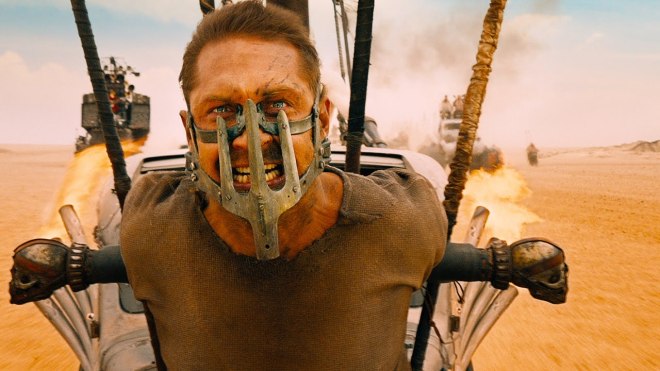
George Miller’s movie is a disturbed fever dream, addled and excitable to the point of delirium. The images, the stunts, the stark blue and orange colorings and the constant, accelerated sensation of being pursued scream that this is an action movie for a future generation. Like the endless car chase that consumes the heroes and villains of Miller’s bleak, post-apocalyptic world, “Fury Road” is so far ahead of every contemporary action movie today just waiting for everyone to catch up.

“Fury Road” itself moves at a faster pace. At times Miller seems to be playing with the frame rate to send his characters into a frenzy and make the chase seem ever more pressing. The shaved and ash-painted War Boys spray chrome over their mouths and feel a rush of adrenaline. Our anti-hero Max (Tom Hardy) is twitchy, nervous and paranoid but always intense. And John Seale’s cinematography zooms, slows and tracks like someone is playing with the remote.

This is a movie always in motion, and that movement is the core of “Fury Road’s” story. When we’re first introduced to Max (Tom Hardy) he smashes a scurrying two-headed lizard and promptly inhales it before being captured by raiding warriors. They imprison him in a massive skull temple carved into the face of a desert cliff, where workers toil below and go mad for momentary floods of water. The man turning the faucet is Immortan Joe (Hugh Keays-Byrne), a warlord more machine than man. His pale body and warts are covered by demonic body armor and his crossbones respirator gives him a dangerous vibe not unlike that of Darth Vader.

Joe sends his greatest general Imperator Furiosa (Charlize Theron) out on a convoy to raid Gasoline Town, only to realize that she has smuggled out Joe’s breeding wives, a half-dozen pristine beauties in scantily clad white garments. Their presence in the film is so radically unexpected from the ruin on all the denizen’s faces. Furiosa herself is shaved bald with a prosthetic arm and a fierce demeanor. Max eventually breaks free from the hunting party looking for Furiosa, and in a survival attempt ends up working together with her to reach salvation in “the Green Place.”

Max shares the film’s namesake, mainly because Miller’s film is an extension, or a 30 year late sequel, to the ‘80s Mad Max trilogy starring Mel Gibson. But as a hero he’s deeply untrusting, impenetrable and a loner. Theron and her company of girls (including Rosie Huntington-Whiteley, Zoe Kravitz and more) end up becoming “Fury Road’s” champions. The women all stand out, get the best lines, kick the most ass and feel the most pain. They’re the human entry point amid the madness.

But “Fury Road” is nothing if not bananas. The film’s car chase consumes nearly the whole movie, and yet it never gets stale. It takes us through an otherworldly sandstorm that spawns a great red spiral of thunder, lightning and chaos. As one of the film’s War Boys, Nux (Nicholas Hoult), enters the storm, he shouts “Fury Road’s” scarily ironic tagline: “What a lovely day!”

MadMax2

So much of the film though is accomplished largely without CGI, and the resulting explosions, the animalistic, vehicular muscle and carnage on display, and the terrifying stunts are all real examples of Miller’s crazed vision of the future. We see a clan of motorcycle warriors leaping over gorges and hurling bombs down at the convoy. We see men grasping onto giant, flexible poles that extend out, place an explosive and whiplash back into place. And this is a movie where for no particular reason a soldier rides on a truck bed suspended by bungee cords and thunders out heavy metal on a flaming guitar. It is an image so incredible and needlessly awesome that movies without it are instantly lesser as a result.

The original “Road Warrior” film (actually the second in the trilogy) instantly became a cult classic. It was weird, apocalyptic and was a new kind of action movie in a wave of gun-toting, macho war movies all concerned with Vietnam. It was from Australia and may as well have been from another world.

“Fury Road” on the other hand is everything contemporary action movies are and so much more. It is purely focused on spectacle over story but doesn’t forget the cinematics that make it unforgettable. It’s crazy and unrealistic as so many are, but it takes everything over the top and outdoes them all. “Fury Road” is the best action movie in a decade because it has the vision, the style and the courage to be truly mad.

4 stars

Kurt Cobain: Montage of Heck

Help me if you can, I’m feeling down
And I do appreciate you being ’round
Help me get my feet back on the ground
Won’t you please, please help me

Montage of Heck PosterThe exuberant pop of John Lennon’s lyrics on The Beatles’ “Help!” masked just how hurt Lennon really was. If only people had actually listened to the words.
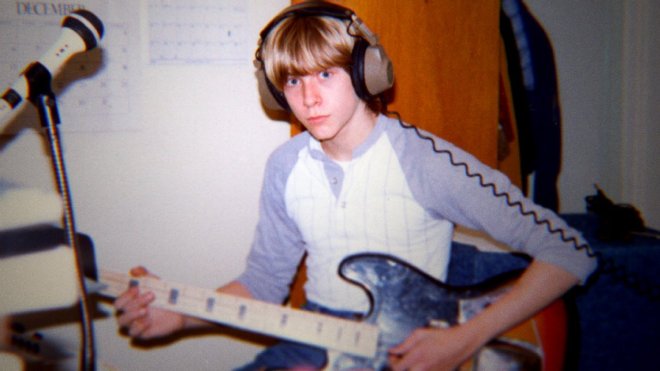
Kurt Cobain was the Lennon for Generation X, a musical genius whose rise to fame was no less meteoric than Lennon’s, and whose life was no less documented. And while the anger and intensity in Nirvana’s music was a little more obvious about his pain, Brett Morgen’s HBO documentary “Kurt Cobain: Montage of Heck” is the first film to successfully to delve into Cobain’s psyche.

Though “Montage of Heck” traverses his life till his death and includes the appropriate notes of rock-doc history, Morgen’s work is a daring and disturbed look into the annals of Cobain’s mind. It’s a horror movie trip of a documentary. The countless audio snippets, scrapbook notes and home movies of Cobain to another director would be an un-cinematic liability, if not purely unusable. Morgen has taken those materials and turned them into a surreal, artistic virtue, one that shows Cobain’s genius and madness better than possibly any rock-doc has dared.

Watching “Montage of Heck” can feel like watching the torture Alex was forced to endure in “A Clockwork Orange”. It’s violent, aggressive, endlessly long, random, perverse and utterly painful. Morgen uses animation and wild, scatterbrained montages of footage that add an image to the sound of Cobain’s genius. If you’re wondering what a Montage of Heck is, it’s Morgen’s rapid smash cuts of campy ‘50s footage and graphic novel gore atop one of Nirvana’s wildest songs, “Territorial Pissings”.

But composing Cobain’s genius in this way does more than create an intense mood. We see incoherent flashes of nightmarish words and adjectives that scream Cobain’s hurt, but they’re actually early brainstorming for his band’s name. These scrapbook scrawls show Cobain’s ambition, organization and dedication in great detail. His margin doodles of early album art ideas are little slices of rock history, but they also demonstrate that so much of his genius was allowing his brain to experiment and put his madness into practice.

Kurt Cobain Montage of Heck

That Morgen was able to create a film around these brainstorms is part of its brilliance. There’s an engrossing animated sequence in which Cobain recounts a memory from his pre-Nirvana, teenage years. He scored weed with some guys he hated because it allowed him to escape. He then took advantage of a mentally challenged girl where his friends originally stole the weed, only to be labeled a “retard fucker” and contemplate suicide. Morgen peppers this incredible story with a string version of “Smells Like Teen Spirit”, and earlier a music box rendition of “All Apologies” that make his precious childhood years so delicate and frail in comparison to what’s to come.

By the film’s end, Morgen allows home movie footage of Cobain and wife Courtney Love to speak above his animated images. These recollections don’t have the style of the rest of “Montage of Heck” but have all the hurt. They live in pitiful junkie squalor, and the media prattles on about how Frances Bean Cobain was born high on crack. It looks like the most disturbing Maysles Brothers movie ever made, but still it has glimpses of Cobain’s love and affection for his music, his wife and his daughter. All the while, Morgen digs up a gem of Kurt covering The Beatles’ “And I Love Her” that speaks wonders.

Another film could’ve made Cobain out to be healthier, more jubilant and playful and less damaged. So many interviews here show Cobain to be simply exhausted and exasperated with the media. Krist Novocelic and Love (but an absent Dave Grohl) both confess that “Kurt didn’t want to be humiliated,” while Morgen eliminates any of their fonder memories for their friend.

But for “Montage of Heck”, Morgen’s depressing and absolutely necessary approach to his life echoes some of Cobain’s own words. “Unless it is about me, it is now my duty to completely drain you.”

4 stars

Kurt Cobain Montage of Heck 2