Jack is a precocious 5-year-old boy. He has an imaginary dog named Lucky, he loves “Dora the Explorer”, and he says he gets his “strong” from his long, never-cut mane of hair. Jack is happy. But Jack cannot safely use the stairs. He’s terrified of playing with his mound of toys. He has no friends. His mom Joy, only in her 20s, has done all she can and pleads, “I just want him to connect with something.”
“Room” is Director Lenny Abrahamson and screenwriter and novelist Emma Donoghue’s moving story of motherhood and adapting to life in new circumstances. But it begins with Joy and Jack confined as prisoners in a small room housed in a garden shed. For Jack, Room (never “a room” or “the room” or “our room”) is the only world he knows. Escaping it means a radical change in Jack’s ability to grapple with what is real and what isn’t. “Room” is such an emotionally affecting story because, regardless of the circumstances, it concerns the walls and spaces we build inside our minds and how we seek solace within them.
Brie Larson is brilliant as Joy, or Ma, since “Room” is seen entirely through Jack’s (Jacob Tremblay) eyes. Despite their captivity, Joy carries on life as usual. She taunts Jack with games of racing from wall to wall, him hardly constrained for movement. Without candles to put on Jack’s birthday cake, she faces the same struggles of any mother trying to do their best for their child. She even protects Jack from her captor Old Nick (Sean Bridgers), keeping him in a closet away from sight while Old Nick has his way with her. 50 creaks on the bed, Jack counts, growing ever more aware of Old Nick despite his mother’s sheltering.
Eventually Joy realizes that after seven years they can’t live this way much longer, and she begins to tear down the lies and stories she has told that compose his understanding of the world. Slowly he starts to pick it up, that there are real people and things that exist outside of Room. Old Nick doesn’t bring things with magic. Dora the Explorer isn’t real, but other people on TV are, or at least playing “dress-up.” In the film’s second half, these new rules and discoveries about the world come in a whirl, five years of child development and exploration rolled into a few brief moments of being outside Room for the first time.
What’s remarkable about “Room” is how Abrahamson can take these dour stakes and make something poetic, even hopeful and amazing when looking at the world. We see Jack lying on his back in a truck bed, the blue sky racing by above him, and it’s a beautiful, mesmerizing moment as much as it is a shock. Inside that room, he’s got a sense of optimism, discovery and playfulness befitting any boy. “Room’s” score is equipped with either tender acoustic guitar strumming or delicate flights of whimsy and curiosity, and it expertly strikes that balance of fear and fantasy.
But “Room’s” themes emerge most prominently in its second half. Escaping Room has not solved their problems. They’re no happier or even less of prisoners, confined to Joy’s parents’ home due to the obsessive media attention. Happiness is not determined by your location but the state of mind you’ve built for yourself. Room contained stability and a healthy relationship for mother and son, and building that again in a new world, even one where Joy and Jack are now “free”, takes time.
Larson is by far the film’s heart and soul. She’s still young, but in front of Jack she’s a rock, stern and firm with the perfect blend of reassuring motherly affection. She can be irritable and sarcastic in the face of her own mother (Joan Allen) and bursting at the seams as she tries to juggle her own acclimation back to normalcy while helping her son. Larson joins the ranks of some of the finest movie moms and does so with maturity beyond her age.
At the same time, Larson has a bundle of joy to care for. Jacob Tremblay is just as special here. As an actor, he has perfect timing and chemistry with his movie mom. Some of his questions alone allow him to get a laugh even when Joy is at her most desperate.
When Joy asks how she’ll get Jack to connect with others, her question isn’t limited to kids or to survivors of abduction. “Room” gets inside the small room in our own head, and through its heart-rending story allows us to find solace through the connections in our own lives.
4 stars
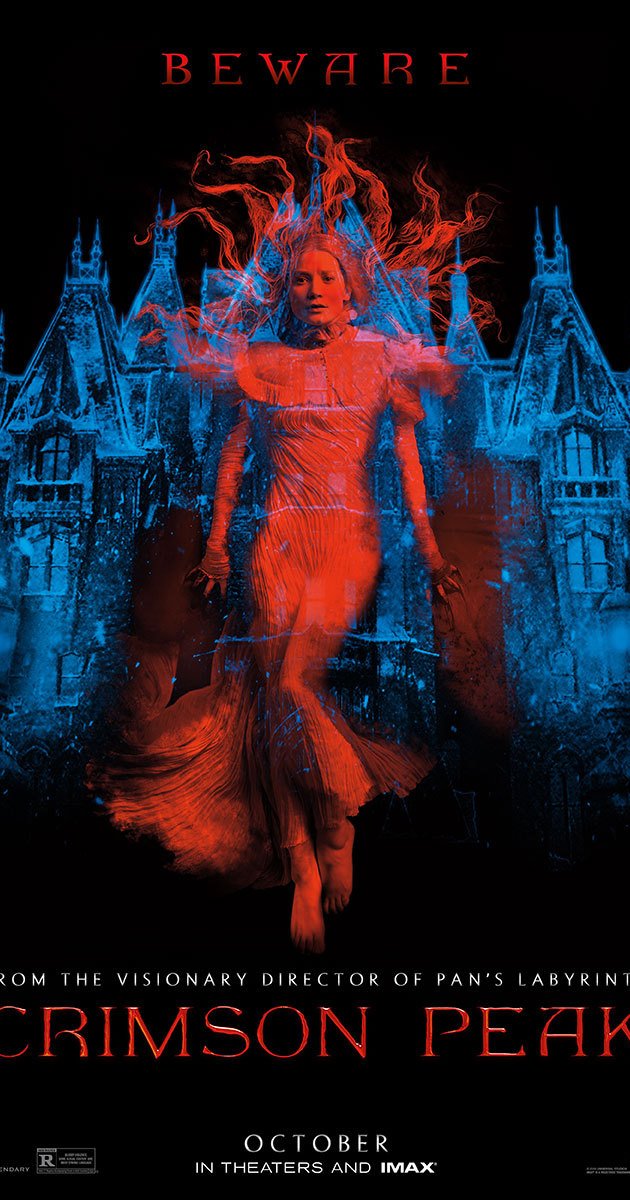
 Sarah Gavron’s “Suffragette” is most relevant today as a piece of historical fiction because issues of women’s rights are in 2015 as prevalent and significant as they were in 1912 London. It’s the slightly fictionalized story of English working women who took up civil disobedience in order to pressure the government to give women the vote.
 Our first look at the kids of “Beasts of No Nation” is through the hull of a broken old box TV. With no screen inside, the camera peers at a distance through the empty frame at these African children playing soccer. We’ve seen these children from the safety of our computers and know little else (ironically, “Beasts” is Netflix’s first original feature and will be consumed almost entirely on smaller screens). We don’t always know exactly where they’re from, and “Beasts” in turn is set in an unspecified West African nation. What are invisible to us are the directions and futures of these kids. Director Cary Joji Fukunaga’s film illuminates through war torn violence and brutality just how without a nation these young people are.
 Steve Jobs and Apple didn’t invent the personal computer. They didn’t invent the portable music player, or the smart phone, or the tablet, or most recently wearable tech. What Steve Jobs did was make technology inviting, accessible and fashionable. That was his innovation and his genius. And it’s something of a paradox that the most successful tech giant is not the one with the newest or the best technology, but the one that reaches its users personally.

 I first knew of Malala Yousafzai when she appeared on “
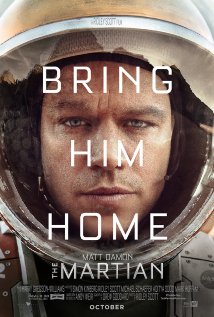 The most impossible feat in Ridley Scott’s “The Martian” is not that a man can survive on Mars. “The Martian” is refreshingly optimistic, a movie that believes in not just the ingenuity and resourcefulness of mankind but the camaraderie and good-nature. It speaks to the power of the Internet and society in the 21st Century to collectively find a solution, but also rally around a moment in history. At the end of “The Martian” the whole world is watching in a unified sensation to see if Mark Watney will make it back alive. That’s an inspiring fantasy we only see in the movies, and one even less common in 2015.
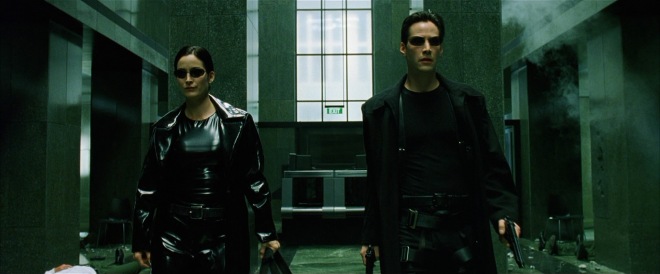
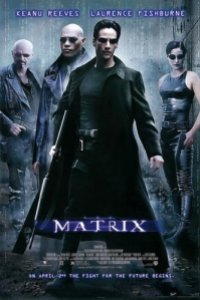 In over 15 years, nothing has aged “The Matrix.” Not two increasingly ridiculous sequels, not a series of box office bombs from the Wachowski siblings, and not the fact that these guys still carry around flip cell phones and interact with the world through pay phones. Movies released just two years later like “Minority Report” look better and more accurate technology-wise than “The Matrix” does, and yet that has not lessened the impact and influence this film still holds.